


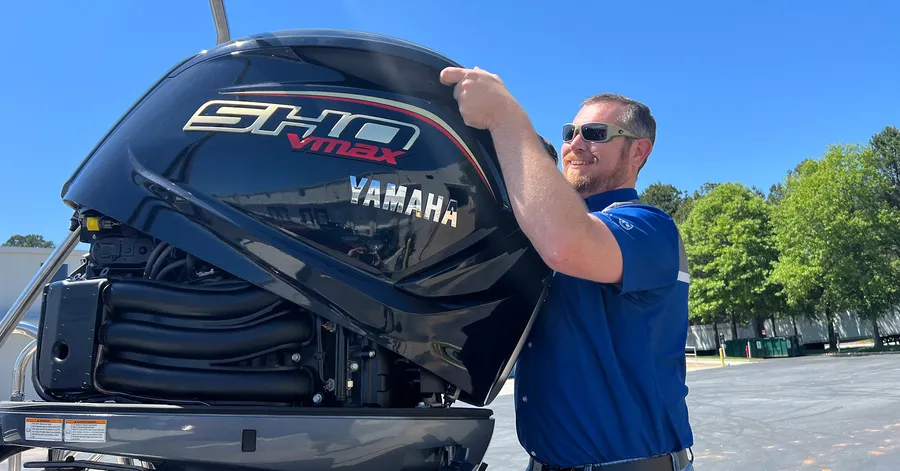
Executing a structured freshwater flush on your Yamaha outboard motor is the single most critical preventive maintenance protocol a captain can perform. Along the Treasure Coast, operating out of Stuart, Florida, means your propulsion system is consistently subjected to high-salinity environments, brackish water currents, and fine sediment from the Indian River Lagoon and St. Lucie Inlet. Over time, salt crystals and mineral debris crystallize inside the narrow cooling passages of your engine block, acting as a thermal barrier that can lead to rapid overheating and catastrophic internal component failure.
Implementing a systematic flushing routine protects your engine's cooling architecture and preserves its long-term mechanical reliability.
1. The Critical Mechanics of Saltwater Corrosion
Saltwater is an aggressive corrosive agent that attacks internal marine metals through chemical oxidation and galvanic action.
- The Scale Problem: When a marine engine is shut down after a run, the trapped saltwater evaporates, leaving behind dense salt crusts inside the water jackets. These deposits restrict water flow and isolate the aluminum block from the cooling effects of the raw-water intake.
- Silt and Mud Accumulation: Navigating shallow backcountry flats forces fine sand and silt into the cooling loops. If left unflushed, these particulates settle in the lower sections of the powerhead, creating a dense sludge that blocks critical water passages and accelerates wear on your raw-water impeller.
2. Systematic Yamaha Flushing Protocol
To completely evacuate contaminants from the cooling galleries, you must perform a thorough flush after every single saltwater excursion.
- Timing Strategy: Always flush the outboard as close to engine shutdown as possible, before the internal heat of the powerhead can completely bake salt crystals onto the cooling sleeve walls.
- The Flushing Process: Connect a heavy-duty garden hose to a high-capacity freshwater source. Utilize the factory-integrated garden hose flush port located on the side of the engine lower cowling. Allow the freshwater to flow through the powerhead for a minimum of 10 to 15 continuous minutes.
- Gravity Drainage: Once the flush is complete, disconnect the hose and ensure the outboard remains trimmed in the vertical, downward position. This allows gravity to completely drain any remaining water out of the midsection and lower unit, preventing stagnant pools from fostering localized galvanic corrosion.
3. Pre-Season Thermal Prep
After an extended period of seasonal inactivity, performing an at-home pre-season flush is an essential technical requirement before splashing your hull for the first time.
- Safe Antifreeze Reclamation: Running your outboard at home using proper flushing muffs or the integrated port allows you to safely drain and collect storage anti-freeze, preventing toxic runoff from contaminating pristine local estuaries and coastal habitats.
- Thermostat Validation: A controlled at-home run provides the necessary time to observe the engine reaching its optimal operating temperature. This ensures that the internal thermostats open smoothly and regulate cooling cycles properly under load.
- Impeller Operational Audits: While flushing, closely monitor the "tell-tale" water stream exiting the back of the housing. A strong, steady stream indicates that your rubber raw-water impeller is flexible and generating the exact water pressure needed to protect the powerhead at high RPMs.
4. Advanced Technical Support and Component Sourcing
While routine flushing handles surface salt removal, internal engine sacrificial anodes and water pumps degrade over time due to friction and age, requiring technical oversight.
- Water Pump Overhauls: Yamaha recommends replacing your raw-water impeller every 100 hours or once a year. If your cooling stream is weak or inconsistent, our factory-certified technicians at the Service department can execute complete lower-unit pressure tests and water pump overhauls.
- Internal Anode Replacement: Outboards feature internal zinc anodes inside the block water jackets that corrode instead of the engine block. Our specialists at the Parts counter stock factory-direct OEM Yamaha anodes, thermostats, and water pump kits formulated specifically for your horsepower rating.
- Transom Modernization: If your current outboard has suffered from past overheating or lacks modern fuel efficiency, upgrading through our authorized Yamaha Repower or Mercury Repower programs can outfit your transom with cutting-edge digital monitoring systems and superior reliability.
Frequently Asked Questions
Can I flush my Yamaha outboard using the built-in flushing port while the engine is running?
No. Yamaha strictly prohibits running the engine when utilizing only the built-in garden hose flushing attachment, as it does not supply sufficient water volume to lubricate the lower unit water pump impeller. Running the engine without water at the lower unit intakes will destroy the rubber impeller within seconds. To flush a running engine, you must use high-quality flush muffs over the lower unit water intakes.
Are major engine overhauls or repower packages eligible for financing?
Yes. Our internal Financing department structures specialized marine loan configurations, allowing you to bundle technical service, high-performance outboards, and extended protections into simple payment frameworks.
How can I learn more about the operational offerings at Central Marine Stuart?
To review our facility heritage and dedication to Treasure Coast mariners, explore our About page. You can monitor technical workshops on our Events page, track maintenance strategies on our Blog, or check our current seasonal deals on the Specials page. For maps and direct lines to our parts bays, visit our Contact page, and read verified client feedback on our Reviews page.